
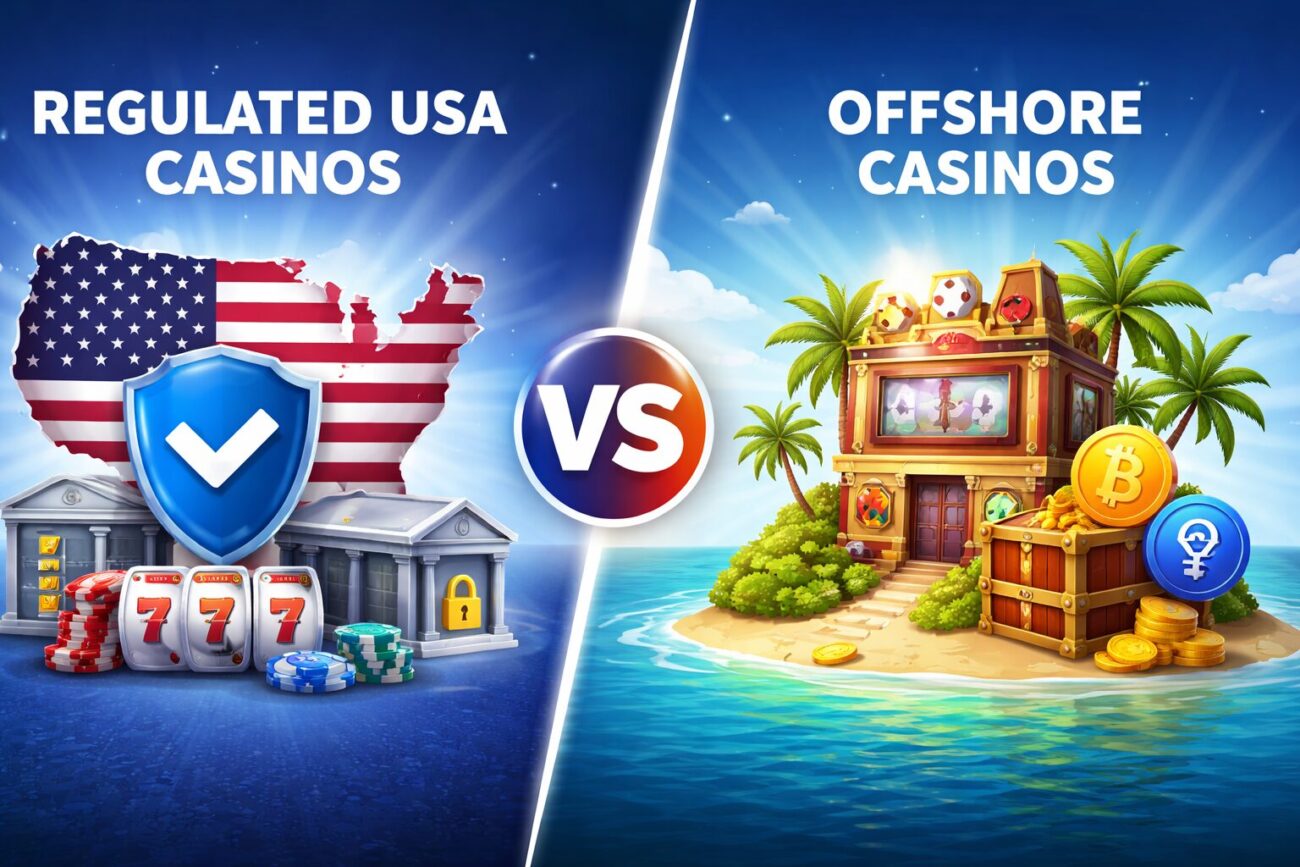
State-regulated online casinos in the United States operate under some of the most detailed and restrictive gambling frameworks in the world. Licensing, payments, game approval, and promotional activity are all governed by state-level rules designed to prioritise oversight, consumer protection, and regulatory control.
Those priorities come with tradeoffs. Certain features that players associate with online casinos elsewhere, such as large promotional bonuses, broad payment options, or wide geographic availability, are limited or unavailable within regulated US markets. These limits are not the result of competitive weakness or policy failure. They are a direct consequence of how regulation is structured.
This article explains what regulated USA online casinos cannot compete on, and why those constraints exist. It does not evaluate which model is preferable. Instead, it outlines how regulatory design shapes what licensed operators are able to offer, and why alternative casino models continue to exist alongside state-regulated platforms.
TL;DR: Regulated USA online casinos operate under strict state-level rules that prioritise oversight, consumer protection, and compliance. Those rules limit how bonuses are structured, which payment methods are available, where platforms can operate, and how quickly features can change. Offshore casinos operate under different regulatory assumptions, which allows greater flexibility in areas like promotions, payments, and geographic access. These differences are structural rather than qualitative, and they help explain why alternative casino models continue to exist alongside state-regulated markets.
Promotional Bonuses and Incentive Limits
One of the most visible differences between regulated USA online casinos and offshore platforms is the structure of promotional offers. In state-regulated markets, bonuses are subject to detailed rules that govern how they are presented, how wagering requirements are applied, and how terms are disclosed to players. Regulators typically require promotional offers to be clearly defined, proportionate, and auditable.
These requirements limit how aggressive bonuses can be. Deposit matches, free spins, and loyalty incentives must fit within approved frameworks, and changes often require regulatory review. This reduces the scope for large headline offers or complex bonus mechanics, even when operators might otherwise be willing to compete more aggressively.
Offshore casinos operate under different conditions. Without state-level promotional controls, they are able to offer larger bonuses and more varied incentive structures. This does not reflect a difference in generosity so much as a difference in constraint. Regulated operators are optimising for compliance and transparency, while offshore operators are optimising for flexibility within their own licensing environments.
Payment Methods and Transaction Flexibility
Payment processing is another area where regulated USA online casinos face clear structural limits. Licensed operators must work with US-based banks, card networks, and payment processors that apply federal compliance standards uniformly. Even in states where online casinos are legal, financial institutions often take a conservative approach, filtering or declining transactions that fall into higher-risk categories.
As a result, regulated casinos tend to rely on a narrow set of approved payment methods. ACH transfers have become the default option in many legal states because they are easier for banks to monitor and control within established compliance frameworks. Card payments and alternative methods may be available, but they are often subject to higher decline rates or additional verification steps.
Offshore casinos are not tied to the same payment infrastructure. They more frequently support cryptocurrencies and international processors that operate outside the US banking system. This allows for a wider range of funding options, particularly for players who experience friction with domestic payment rails. The difference reflects regulatory exposure rather than payment preference, with regulated operators constrained by banking oversight and offshore platforms operating beyond it.
Geographic Availability and Market Coverage
State regulation also places firm limits on where regulated online casinos can operate. Licensed platforms are authorised only within specific state borders, and access is enforced through geolocation technology. Players must be physically located within a legal state at the time of play, even if they are residents of another jurisdiction with its own regulated market.
This creates isolated, state-specific ecosystems rather than a unified national market. Game libraries, promotions, and platform availability can differ significantly from one state to another, and large portions of the country have no regulated online casino options at all. In those states, regulated operators are simply absent.
Offshore casinos are not subject to these geographic constraints. They remain accessible to players across most US states, including those where no licensed alternatives exist. This broader availability is not a competitive tactic so much as a structural outcome. Where regulation limits participation to a small number of jurisdictions, alternative models naturally persist to serve unmet demand.
Game Libraries and Software Constraints
Regulated USA online casinos operate within tightly controlled software ecosystems, but that control does not necessarily result in smaller game libraries. In many legal states, licensed casinos offer thousands of slots and table games from major international providers, often exceeding the raw game count found at offshore platforms.
The constraint is not quantity, but process. Every game provider, platform, and individual title must be approved by state regulators before it can be offered to players. Certification typically involves technical testing, compliance verification, and ongoing reporting obligations. While this ensures consistency and oversight, it also means that software choices are shaped by regulatory readiness rather than by speed or reuse across markets.
Offshore casinos draw from a different software supply chain. Instead of certifying games state by state, offshore platforms rely on providers that design large, reusable libraries intended to be deployed across many brands and jurisdictions with minimal modification. This allows for faster rollout and broader cross-casino consistency, even if the underlying games evolve more slowly over time.
The contrast is not about how many games are available. It is about how software ecosystems are structured. Regulated markets prioritise compliance and jurisdiction-specific approval, while offshore markets prioritise portability and reuse. Those differing priorities shape how casino software is built, maintained, and distributed, even when overall game volume appears similar.
Operational Flexibility and Regulatory Control
Operational oversight is another area where regulated and offshore models diverge. State-regulated online casinos are subject to continuous supervision by local regulators, including audits, reporting requirements, and enforcement mechanisms that apply directly to both operators and their technology partners. Dispute resolution, account verification, and compliance processes are handled within clearly defined legal channels.
These controls limit flexibility. Changes to platform features, account rules, or operational processes often require regulatory approval, and enforcement standards are designed to be consistent across all licensed operators within a state. This creates a predictable environment, but it also reduces the ability to adapt quickly or implement non-standard features.
Offshore casinos operate under a different set of assumptions. Oversight is provided by the jurisdiction in which the operator is licensed, and enforcement mechanisms are typically contractual or regulator-specific rather than tied to US state authorities. This allows for greater operational latitude, but it also places more responsibility on the player to understand the governing terms and applicable protections. The difference reflects contrasting priorities between local regulatory control and cross-border operational flexibility.