
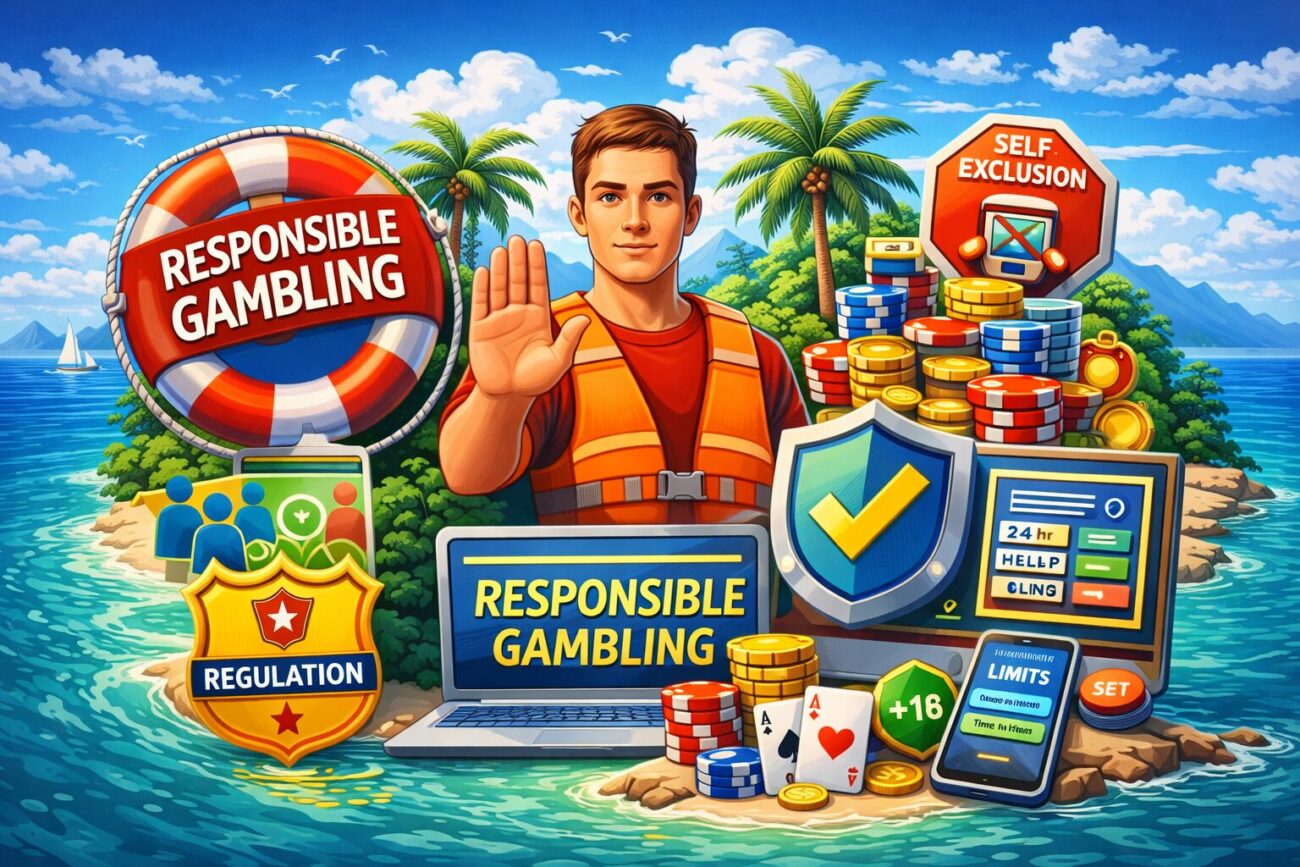
Player protection and responsible gambling in Oceania operate within a regional landscape that includes both structured regulatory systems and lighter oversight environments. While some countries have developed formal frameworks that define operator responsibilities and harm-minimisation measures, others address gambling risks through broader consumer protection approaches or rely more heavily on individual responsibility and voluntary support resources. These differences shape how safeguards appear across online casinos serving Oceania, where protections may be driven by licensing rules, operator policies, or general legal standards depending on the jurisdiction.
These variations reflect differences in market scale, regulatory capacity, and legal development rather than a single regional policy direction. Larger jurisdictions in the region tend to integrate responsible gambling into licensing and compliance systems, while smaller Pacific nations may not maintain the same level of dedicated online gambling oversight. As a result, player protection in Oceania is shaped by a mix of formal requirements, platform-level tools, and wider public policy frameworks.
TL;DR: Player protection in Oceania varies between structured regulatory systems and lighter oversight environments. Larger markets like Australia and New Zealand use formal frameworks that include self-exclusion tools, advertising controls, operator safeguards, and access to support services. In smaller Pacific jurisdictions, responsible gambling measures may rely more on operator practices, general consumer protections, and voluntary support systems due to differences in regulatory capacity and market scale. Across the region, player protection combines platform tools, policy measures, and public health services.
What Player Protection Means in an Online Context
In online gambling, player protection refers to the systems and tools designed to help individuals manage risk and reduce the potential for gambling-related harm. Unlike land-based environments, online platforms operate through account-based systems, which allow safeguards to be built directly into the user experience. These measures are typically structured around monitoring activity, setting limits, and providing clear information about play.
Common online protection mechanisms include options for players to set deposit or spending limits, restrict session time, take temporary breaks, or close accounts altogether. Identity verification processes also play a role by ensuring that accounts are tied to real individuals and that age requirements are met. These features form part of the technical framework that allows responsible gambling measures to be applied consistently across digital platforms.
Beyond platform tools, player protection also involves access to information and support. This can include links to counselling services, educational materials about gambling risks, and guidance on how to recognise problematic behaviour. Together, these elements create a multi-layer system where technology, policy, and support resources interact to address risk in an online environment.
Structured Frameworks in Larger Markets
In larger Oceania markets, responsible gambling is more clearly embedded within formal regulatory systems. In Australia, national and state-level measures combine to create structured expectations around harm minimisation, advertising standards, and consumer protection. A central example is the national self-exclusion register BetStop, which allows individuals to block themselves from licensed online wagering services across Australia. Enforcement of interactive gambling rules, including restrictions on certain online services and compliance oversight, is handled by the Australian Communications and Media Authority.
In New Zealand, gambling regulation operates under the Gambling Act 2003, with a strong policy emphasis on minimising harm. Oversight by the Department of Internal Affairs includes requirements tied to harm-prevention strategies, host responsibility principles in licensed venues, and support frameworks aimed at reducing problem gambling. While the structure of online gambling differs from land-based sectors, the underlying harm-minimisation objective remains central to regulatory thinking.
These systems illustrate how responsible gambling can be integrated into licensing and compliance rather than treated as an optional feature. Operator obligations, advertising limits, and access to exclusion mechanisms are framed as part of broader consumer protection goals, showing how player protection becomes a formal regulatory objective in more developed markets.
Role of Operators in Implementing Safeguards
Even within structured regulatory environments, many responsible gambling measures are delivered directly through operators’ platforms. Licensing rules may set the framework, but it is individual gambling services that implement practical tools such as deposit limits, session reminders, cooling-off periods, and account closures. These features are built into account systems and can be activated by players as part of managing their own gambling behaviour.
Operators are also typically responsible for providing visible access to responsible gambling information. This can include explanations of game mechanics, warnings about risk, links to support services, and guidance on recognising signs of problematic play. In regulated markets, these requirements are often tied to licence conditions or consumer protection expectations, meaning they form part of standard operational practice rather than optional add-ons.
In jurisdictions with lighter regulatory oversight, operator-level safeguards can still play an important role, but their scope may depend more on company policy than on nationally defined standards. This creates variation in how consistently tools are applied, highlighting the connection between formal regulation and the uniform delivery of player protection measures across platforms.
Differences in Smaller Pacific Jurisdictions
In smaller Pacific nations, the structure of player protection often reflects the same capacity and resource constraints that shape broader gambling regulation. Dedicated online gambling authorities or detailed harm-minimisation frameworks may not be in place, meaning responsible gambling oversight is less likely to be built into a specialised licensing system. Instead, online gambling activity may sit within general legal or consumer protection environments without a distinct set of gambling-specific safeguards.
In these contexts, many of the practical tools associated with responsible gambling, such as self-exclusion options, limit-setting features, and links to support services, are more likely to depend on operator policies than on nationally mandated standards. This can lead to variability in how protections are presented and enforced, since there may be fewer uniform requirements governing platform design or player communication.
Support services and public health responses may still exist, but they are often delivered through broader health or community frameworks rather than through gambling-specific regulation. As a result, player protection in some Pacific jurisdictions can rely more heavily on individual awareness and voluntary engagement with support resources, reflecting structural differences rather than a single, region-wide model of responsible gambling oversight.
Self-Exclusion and Support Services
Self-exclusion is one of the most visible responsible gambling tools across Oceania, though how it operates varies by jurisdiction. In more structured systems, exclusion can function at a national level, allowing individuals to block access to licensed operators through a central register. Australia’s national self-exclusion system, BetStop, is an example of this approach, designed to prevent registered users from opening accounts or placing bets with participating services.
In other environments, self-exclusion may be handled at the operator level rather than through a unified national system. Players can request account closures or temporary breaks directly through individual platforms. While this still provides a practical safeguard, it may require users to repeat the process across multiple services if no central register exists.
Support services form another key part of the protection framework. In Australia, services such as Gambling Help Online provide counselling and information, while in New Zealand, organisations like the Problem Gambling Foundation of New Zealand offer assistance and harm-reduction programmes. These services operate alongside regulatory measures, providing help that extends beyond platform tools and into broader public health support.
Advertising and Consumer Protection
Advertising and consumer protection rules form another layer of responsible gambling in parts of Oceania, particularly in more developed regulatory environments. In Australia, gambling advertising is subject to restrictions under broadcasting and online media rules overseen by the Australian Communications and Media Authority, alongside industry codes that limit how and when gambling promotions can be shown. These measures are designed to reduce exposure among minors and to prevent marketing that presents gambling as a solution to financial problems or personal difficulties.
In New Zealand, consumer protection principles also extend to how gambling services are promoted, with oversight involving general advertising standards and harm-minimisation expectations linked to gambling policy. Advertising frameworks aim to ensure that promotions are not misleading and that risk information is not obscured, supporting a broader approach where marketing practices are considered part of player protection.
In jurisdictions with lighter gambling-specific regulation, advertising controls may rely more heavily on general consumer law and media standards rather than on dedicated gambling rules. This can still provide a level of protection, but the link between advertising oversight and formal gambling harm-minimisation policy may be less direct than in markets with more structured regulatory systems.
How Payment Systems Intersect With Protection
Payment systems are another area where player protection and responsible gambling objectives can overlap. Because online gambling is account-based and financially tracked, operators can use transaction data to support safeguards such as deposit limits, cooling-off periods, and checks on unusual activity patterns. These mechanisms can help create pauses in play or flag behaviour that may warrant additional information or support.
In more structured regulatory environments, financial controls may be linked to licensing expectations around consumer protection. Requirements to verify identity before transactions, to display clear records of deposits and withdrawals, and to process withdrawals transparently can all contribute to a framework where players have greater visibility and control over their spending. Payment policies therefore form part of the broader infrastructure that supports informed decision-making.
In jurisdictions with lighter oversight, these protections may depend more heavily on operator practices rather than on nationally defined standards. Even so, the design of payment systems still influences how easily players can track activity, set financial boundaries, and manage access to funds. This shows how financial infrastructure and responsible gambling measures often operate together as part of the overall player protection landscape.
Regional Variation and Ongoing Development
Player protection systems across Oceania continue to evolve as digital gambling technologies and policy priorities change. Larger markets such as Australia and New Zealand periodically update harm-minimisation strategies, advertising rules, and consumer safeguards in response to research, public consultation, and shifts in gambling behaviour. This reflects an approach where responsible gambling is treated as an ongoing policy area rather than a fixed set of rules.
Elsewhere in the region, developments may occur more gradually, often influenced by broader digital policy, regional cooperation, or changes in economic and regulatory capacity. As online services become more integrated into everyday life, expectations around consumer protection and risk management can shape how gambling is addressed within national legal systems.
This means the responsible gambling landscape in Oceania is not static. It is shaped by a combination of local conditions and wider international trends, leading to continued adjustments in how player protection tools, support services, and regulatory frameworks are structured across different parts of the region.