
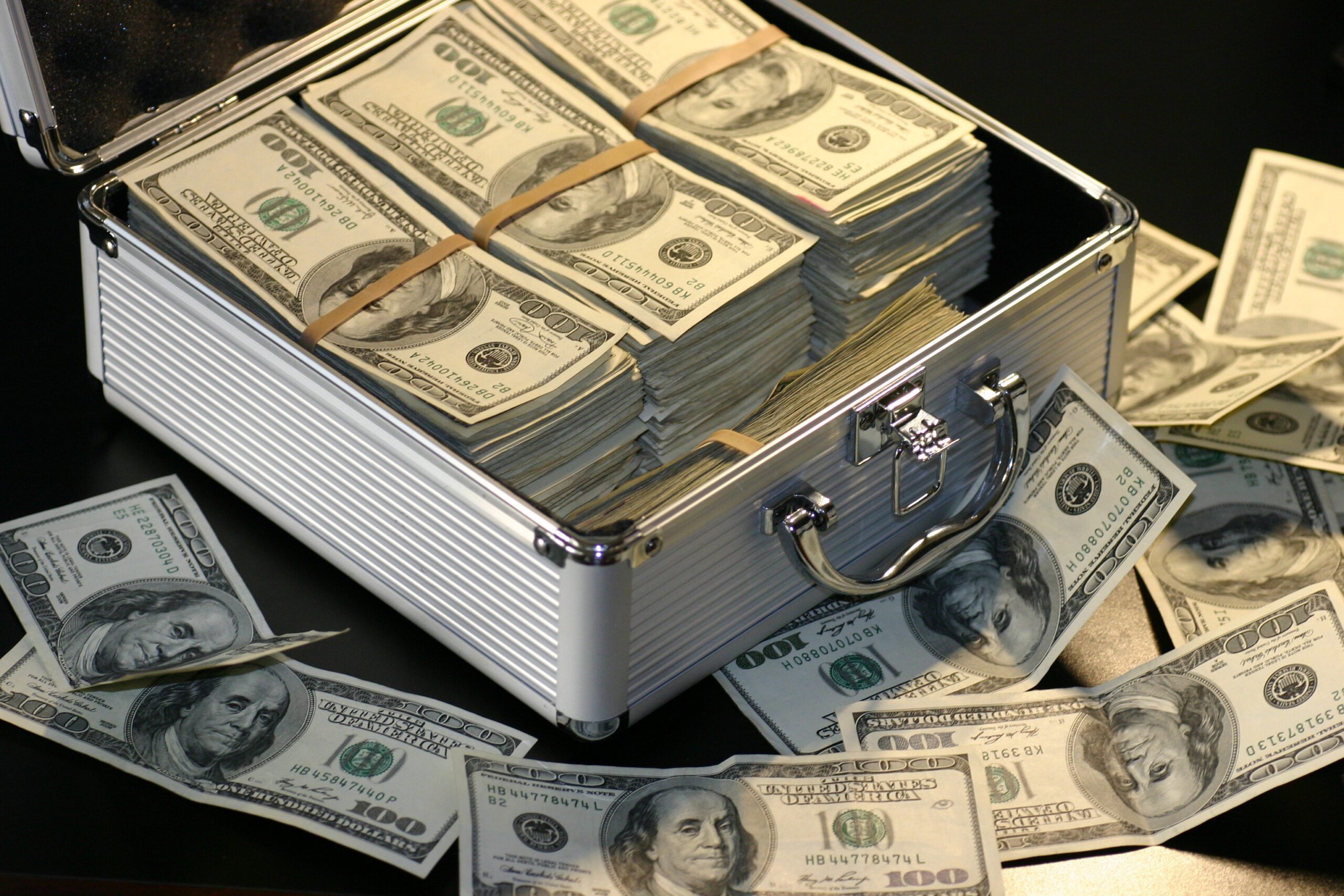
There is no guaranteed way to win a million dollars.
There are, however, very different ways to reach a $1 million payout.
You could build enough skill to win a major poker tournament. You could hit a progressive jackpot or lottery prize. You could make an unusually successful sports bet. You could also make money through investing or trading, although that belongs in a very different category from gambling.
The mistake is treating all of these as equivalent paths.
The faster a route can produce $1 million from a small starting stake, the more it usually depends on extreme variance rather than repeatable skill.
What Are the Main Ways to Win $1 Million?
| Route | Main Driver | Can Skill Improve the Outcome? | Can $1 Million Happen Quickly? |
|---|---|---|---|
| Poker | Skill plus variance | Yes | Yes, through major tournaments |
| Progressive jackpot slots | Chance | Generally no | Yes, but extremely rarely |
| Sports accumulators | Prediction skill plus compounding probability | Potentially | Yes, but very unlikely |
| Lottery | Chance | No meaningful draw-prediction edge | Yes, but at enormous odds |
| Investing or trading | Capital, returns, time and risk | Potentially | Possible, but rapid routes generally require extreme risk or large starting capital |
Can You Win $1 Million Playing Poker?
Yes. Poker is probably the most defensible gambling route on this list because long-term results are not determined by chance alone.
Cards create variance, but player decisions, opponent quality, bankroll management and tournament selection all affect expected results.
Major poker tournaments also genuinely award seven-figure prizes.
The 2026 World Series of Poker Main Event had 9,208 entries paying $10,000 each. Winner Lucas Jumalon received $10 million, while every player who reached the nine-handed final table received at least $1 million.
Even the 2026 $1,000 WSOP Mini Main Event paid exactly $1 million to its winner.
Does That Mean a Good Poker Player Can Expect to Win $1 Million?
No. A massive tournament field creates enormous variance.
The 2026 WSOP Main Event had 9,208 entrants and only nine reached the million-dollar final table.
Skill can increase your chance of surviving such a field, but even elite players can enter major tournaments repeatedly without ever winning one.
Poker lets skill change your probability. It does not remove tournament variance.
Why Is Poker Different From Winning a Slot Jackpot?
Because poker gives you repeated decisions that can create an edge against weaker opponents.
A progressive slot does not.
If two people play the same slot at the same stake, one cannot improve the jackpot probability by bluffing better, studying harder or reading the machine.
In poker, years of study can change the quality of decisions. In a slot, the million-dollar result still depends on whether the rare jackpot outcome appears.
How Much Have Top Poker Players Actually Won?
Modern tournament records demonstrate that millions of dollars can genuinely be earned through poker.
Phil Hellmuth currently holds 17 WSOP bracelets and has more than $20 million in recorded WSOP winnings. Daniel Negreanu has more than $37 million in WSOP-branded tournament earnings.
Those numbers should not be confused with net profit or personal net worth. Tournament databases record prize money, not all buy-ins, expenses, staking arrangements, taxes or cash-game results.
This is why the old table estimating poker players’ “net worth” has been removed.
Can You Win $1 Million on a Progressive Slot?
Yes. Progressive jackpots can grow into seven or eight figures, and a qualifying spin can produce a million-dollar payout almost instantly.
But this is the purest example of the trade-off between speed and probability.
You do not need years of poker study. You could theoretically hit a jackpot on the first qualifying spin.
You also cannot create that outcome through ordinary slot strategy.
The accessibility of the prize is high. The probability of actually receiving it is extremely low.
How Do Progressive Jackpots Reach $1 Million?
A progressive jackpot grows according to the rules of the particular game or network.
Some jackpots are linked across many machines or casinos, while others exist on a single game or local network.
A portion of qualifying wagering can contribute to the jackpot, although the exact funding mechanism differs by game.
Some jackpots also start from a guaranteed seed value after being won.
You should check the specific game rather than assuming every progressive slot works the same way.
Does a Bigger Jackpot Mean the Slot Is Better Value?
No. A large jackpot increases the value of one rare outcome.
It does not tell you the probability of winning that outcome, the base game’s RTP or how the remaining prizes are distributed.
A multimillion-dollar progressive can still be a negative-expectation wager.
That is why “this game can make you a millionaire” and “this is a good-value game” are separate claims.
Should You Keep Playing Until a Jackpot Eventually Hits?
No. The fact that somebody eventually wins a progressive does not mean persistence guarantees that the winner will be you.
Every additional negative-expectation spin adds more wagering exposure.
If the jackpot probability is extraordinarily small, buying thousands more spins can still leave your personal chance of winning tiny while substantially increasing expected losses.
Can You Win $1 Million With a Sports Accumulator?
Yes, in principle.
An accumulator combines several selections into one bet. All legs normally need to win for the accumulator to pay.
Because the decimal odds multiply together, a small stake can theoretically create an enormous potential payout.
That is also why long accumulators are so difficult to win.
Why Do Accumulator Odds Get So Large So Quickly?
Because probabilities multiply.
Suppose you somehow identify ten independent selections that each have a true 60% probability of winning.
The chance all ten succeed is: 0.6010 = about 0.60%.
That is roughly 1 chance in 165, even though every individual selection was more likely to win than lose.
Add more legs and the combined probability falls rapidly.
This is why accumulator payouts can become enormous without the bookmaker offering free money.
Does Sports Knowledge Help With Accumulators?
It can help if it allows you to estimate probabilities more accurately than the market after accounting for bookmaker margin.
But being knowledgeable about football does not automatically make a 15-leg accumulator good value.
Every additional leg introduces another event that must be predicted correctly and usually another layer of bookmaker margin.
A million-dollar potential payout tells you the reward if everything goes right, not whether the wager itself is favourable.
Can You Win $1 Million on the Lottery?
Yes. Lottery games are specifically designed to offer very large prizes from relatively small stakes.
For example, matching the five white balls without the Powerball currently pays $1 million in Powerball.
The official odds of winning that $1 million prize are about 1 in 11.69 million.
The jackpot odds are about 1 in 292.2 million.
Is the Lottery the Easiest Way to Become a Millionaire?
It may be one of the easiest ways to gain access to a million-dollar prize.
It is one of the hardest ways to actually win one.
A ticket costs very little relative to the potential payout, which is why lotteries are accessible to millions of players.
But that accessibility does not improve the individual odds.
Low entry cost and high probability of success are completely different things.
Can You Improve Your Lottery Odds?
Only in obvious ways such as buying more distinct combinations.
If one ticket has a 1-in-11.69-million chance of the Powerball $1 million prize, buying two different tickets gives you two chances.
It does not transform the lottery into an attractive investment.
Number patterns, birthdays and previous draw results do not make one valid combination inherently more likely to be drawn than another.
Our guide to how to win the lottery explains that distinction in more detail.
What About Betting on International Lottery Results?
This exists, but it is not always the same product as buying an official lottery ticket.
Some services sell actual entries through intermediaries. Others let customers bet on the result of an external lottery and fund the payout themselves or through insurance.
Those are structurally different arrangements.
If you use such a service, check whether you own an official ticket, who is responsible for paying a jackpot, what maximum payout applies and whether prizes can be paid in instalments.
Can You Make $1 Million Through Trading?
Yes, but this should not be presented as the financial equivalent of roulette.
Financial markets are not binary coin flips where prices can only go “up or down” with equal probabilities.
Assets can move by different amounts, positions can generate income or costs, markets incorporate information and different instruments expose traders to very different risks.
Investing, professional trading and highly leveraged speculation should therefore be separated.
Can Leverage Make You Rich Quickly?
It can multiply gains, but it also multiplies losses.
The old version of this guide suggested that retail traders could borrow up to 1,000 times their deposit and use extreme leverage when they felt confident about a market move.
That is not appropriate advice and is not representative of regulated UK retail CFD trading.
UK rules cap retail CFD leverage between 30:1 and 2:1 depending on the underlying asset and require protections such as margin close-outs and negative balance protection.
Those restrictions exist precisely because leveraged products can produce rapid and severe losses.
Why Doesn’t “I’m Sure the Price Will Move” Make Leverage Safe?
Because confidence is not the same as certainty.
A market can move against a correct long-term thesis before eventually moving in the expected direction.
With enough leverage, a relatively small adverse movement can close the position before that happens.
Leverage therefore changes more than potential profit. It changes how little room you have to be wrong, early or temporarily.
Is Trading a Faster Way to $1 Million Than Gambling?
That depends mostly on starting capital and risk.
Turning $900,000 into $1 million requires an 11.1% gain.
Turning $10,000 into $1 million requires multiplying the account by 100.
Those are completely different problems.
The smaller the starting capital and shorter the target timeframe, the more extraordinary the required return becomes.
This gives us another useful principle:
A million-dollar target is meaningless without knowing the starting capital and the time allowed to reach it.
Did George Soros Really Make $1 Billion on One Trade?
Soros famously made an estimated $1 billion for his fund around the 1992 sterling crisis by building a large short position against the pound.
But stories like this can be misleading when presented as evidence that an ordinary retail trader can simply find the next equivalent opportunity.
Large professional funds use substantial capital, financing, research, risk controls and institutional infrastructure.
The dollar size of a famous trade does not tell you its percentage return or how reproducible it is for a small account.
Which Route Gives You the Most Control?
Poker gives you considerably more control than a lottery ticket or progressive slot because your decisions can affect expected results.
Investing or trading can offer even more analytical control, but the range of strategies and risks is far wider and it is not properly categorized as casino gambling.
Lottery and slot jackpots sit at the opposite extreme. The result is overwhelmingly driven by whether a rare random event occurs.
| Route | Player Control | Variance | Typical Starting Capital Needed for a $1m Outcome |
|---|---|---|---|
| Poker tournament | High relative to casino games | Very high | Can be relatively low compared with the prize, but repeated entries and skill development cost money |
| Progressive slot | Very low | Extreme | Potentially one qualifying stake |
| Lottery | Very low | Extreme | Potentially one ticket |
| Sports accumulator | Some, if you can estimate probabilities better than the market | Extreme as legs accumulate | Can be very small, but probability falls rapidly as payout grows |
| Investing/trading | Potentially high | Depends entirely on strategy and leverage | Strongly dependent on starting capital and timeframe |
Which Method Can Turn the Smallest Stake Into $1 Million?
Probably a lottery, progressive jackpot or very long sports accumulator.
But that tells you something important about probability.
If a tiny stake can produce a million-dollar prize without requiring a corresponding skill advantage, the winning event has to be extremely rare or the economics would not work.
That is why potential return on stake should never be analysed without probability.
Which Method Gives You the Best Chance of Eventually Reaching $1 Million?
If we restrict the comparison to gambling, a genuine long-term skill edge offers a fundamentally different path from hoping for one enormous jackpot.
A strong poker player can repeatedly enter favourable games and accumulate profits over time.
A lottery player cannot become better at causing winning numbers to appear.
That does not make poker easy. It means poker provides a possible repeatable mechanism that pure-chance jackpots do not.
Does Winning $1 Million Mean You Made $1 Million?
Not necessarily.
This is especially important in poker and gambling records.
If someone wins a $1 million tournament prize after years of paying buy-ins, travel costs and staking expenses, the headline prize is not the same as lifetime profit.
Similarly, a lottery jackpot can be advertised as an annuity amount while the available lump sum is smaller.
Gross winnings and net wealth created are different numbers.
Why Are Net-Worth Lists a Bad Way to Measure Gambling Success?
Because personal net worth can include businesses, investments, sponsorships, property, inheritances and income unrelated to gambling.
The old version of this article listed estimated net worth beside WSOP bracelet counts as though one measured the other.
It does not.
Tournament winnings are at least observable. Net worth estimates for poker players are often speculative and tell us little about whether their poker itself was profitable.
How Fast Can You Realistically Win $1 Million?
The word “realistically” changes the answer.
A lottery ticket or progressive slot could produce the outcome today, but with an extremely small probability.
A skilled poker player could win a seven-figure tournament this year, but first has to become competitive enough to survive enormous fields.
An investor might accumulate $1 million over years through returns and additional contributions rather than one dramatic event.
The faster you insist the outcome must occur, the more you generally have to rely on starting capital, leverage or luck.
Should You Try Every Method Until One Works?
No. The old version of this guide ended by recommending that readers try all the different methods and see what sticks.
That combines unrelated risk systems and encourages exposure without asking whether any particular opportunity is favourable.
If you play poker, judge whether you have an actual skill edge.
If you buy a lottery ticket or play a jackpot slot, understand that you are purchasing a very small chance of a very large prize.
If you invest or trade, assess that activity as investing or speculation rather than disguising leverage as a gambling shortcut.
What Is the Most Important Thing to Understand About Winning $1 Million?
A million-dollar outcome can be created in two fundamentally different ways.
You can start with relatively little money and require an extraordinary multiplier, or you can start with more capital, skill and time and require a much smaller percentage gain.
A $5 ticket turning into $1 million is spectacular because the multiplier is 200,000x.
Turning $800,000 into $1 million requires only a 25% increase.
The headline destination is identical. The probability and mechanism are completely different.
The smaller the starting stake and the faster you want to reach $1 million, the more the result has to come from extreme luck, extreme risk or both.
Gavin has spent over a decade writing about online casinos across every major operator and market. He has hundreds of published articles about online casinos, games like slots, blackjack, and roulette, and has played at top sites across the world.